
Most homeowners don’t think about pests until they see one. By then, the damage is often already done. Understanding the importance of seasonal pest inspections and tips for prevention can protect your home, your health, and your budget before problems take hold.
Introduction
Pest pressure doesn’t follow a predictable calendar. Irregular weather patterns, milder winters, and shifting seasons have accelerated pest activity across the Northeast, bringing earlier infestations and more frequent sightings throughout the year.
For homeowners in Southern New England, that reality is especially relevant. Braman Termite & Pest Elimination has served this region since 1890, and the pattern is consistent: properties without regular inspections face higher repair costs, greater health risks, and fewer treatment options.
A professional inspection gives you an accurate picture of what’s happening inside and outside your home. Catching pest pressure early is almost always less expensive and less disruptive than treating an established infestation.
Why Seasonal Pest Inspections Matter
Seasonal inspections give pest control professionals a chance to identify activity before it escalates. According to NPMA/PestWorld.org, irregular weather is accelerating pest activity and leading to earlier, more frequent encounters across the Northeast. Despite this, only 27% of homeowners have ever had a professional pest inspection.
Key reasons to schedule seasonal inspections include:
- Changing pest pressure: Each season brings different pests, from termite swarmers in spring to rodents seeking shelter in fall.
- Early detection: Infestations often develop inside walls and crawlspaces for years before visible signs appear.
- Health protection: Ticks, rodents, and cockroaches carry pathogens that pose direct risks to household members.
- Property value: Undetected termite damage can reduce a home’s value by 20%, according to RapidEye Inspections.
- Year-round rodent risk: Braman’s experience in New England shows that rodent season now runs from January to December, making periodic inspection essential regardless of the time of year.
What Seasonal Pest Inspections Actually Cover
Seasonal pest inspections cover the full structure, from the exterior perimeter to interior spaces, using tools like moisture meters and thermal imaging cameras to detect hidden activity. A thorough inspection goes far beyond a visual walkthrough, giving professionals the means to identify pest pressure that would otherwise go unnoticed until damage is already significant.
Exterior Perimeter and Entry Points
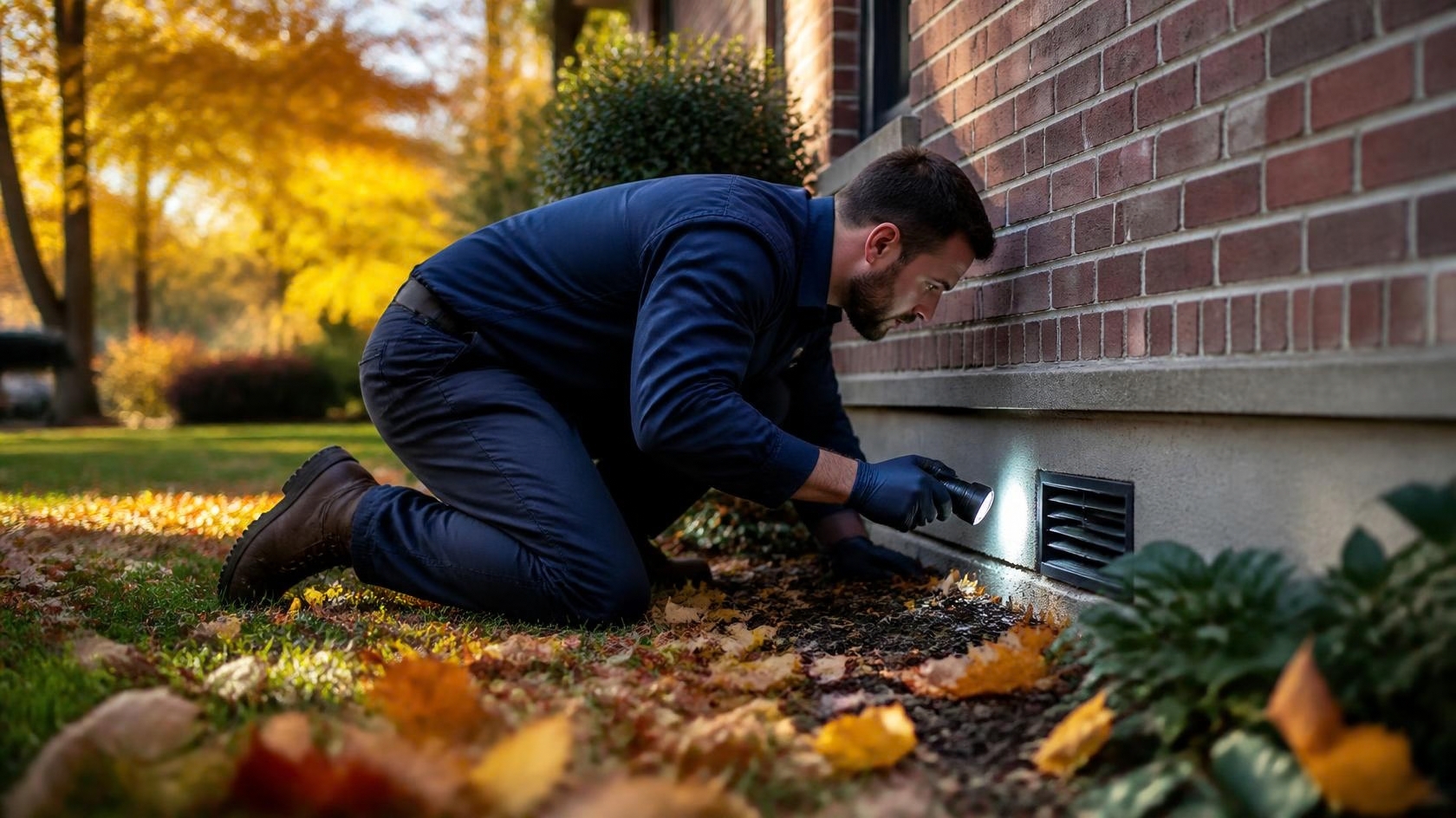
The exterior inspection targets the foundation, siding, utility line penetrations, window frames, door gaps, and vents. Inspectors look for cracks, moisture damage, and signs of wood-destroying insects such as termites, carpenter ants, and carpenter bees.
According to Braman Pest Control, September is prime time for fall insect invaders, making a pre-winter exterior inspection particularly important. Loading docks, dumpsters, and delivery areas on commercial properties receive the same close attention.
Basements, Crawlspaces, and Attics
These areas are where infestations develop undetected for the longest periods. Inspectors check for termite mud tubes, rodent droppings and gnaw marks, moisture intrusion, and compromised insulation.
Braman’s termite inspection process begins with a thorough review of all areas of termite activity and conditions conducive to infestation, as noted on bramanpest.com. Attic vents and crawlspace access points are also assessed for gaps that allow pest entry.
Hidden Damage Pests Cause Before You Notice
Pests cause significant structural and health-related damage long before any visible sign appears, accumulating harm inside structural cavities, beneath flooring, and within insulation. By the time a homeowner notices hollow-sounding wood or unexplained droppings, an infestation is typically well established, meaning the most costly damage has already occurred out of sight.
Structural and Insulation Damage
Termites cause more than $6.8 billion in U.S. property damage annually, and that damage is almost universally excluded from standard homeowners insurance, according to NPMA via PR Newswire. Most infestations go unnoticed for two to five years because the damage occurs inside walls and framing.
Subterranean termites, responsible for 95% of all termite damage in the U.S., feed continuously, day and night, according to NPMA/PestWorld.org.
Fire Hazards and Contamination Risks
Rodents chew electrical wiring, creating a direct fire risk inside wall cavities. They also contaminate surfaces with pathogens. Rodents invade an estimated 21 million U.S. homes every winter, per NPMA/PestWorld.org.
Tick-borne disease is a growing concern as well. In Massachusetts, tick-borne disease diagnoses climbed from 6,202 in 2022 to 11,115 in 2025, a 79% increase in three years, according to a 2026 pest control industry report citing Massachusetts DPH data.
Best Time of Year to Schedule a Pest Inspection
The best time to schedule a pest inspection is timed to match seasonal pest behavior, making prevention more effective than reactive treatment. The right schedule depends on your property type, location, and pest history, since different pests peak at different points in the year and require different preventive windows to intercept successfully.
Annual vs. Seasonal Inspection Frequency
Homeowners in wooded or coastal areas of Connecticut, Massachusetts, and Rhode Island face elevated tick and carpenter ant pressure year-round. For these properties, bi-monthly scheduling provides the most consistent protection. For general pest activity, HomeAdvisor recommends a professional termite inspection at least once every one to two years, with annual inspections for high-risk properties.
Semiannual Pest Inspections
A semiannual schedule pairs a spring inspection with a fall inspection. Spring focuses on termite swarmers, moisture issues, and perimeter gaps that opened during winter. Fall focuses on exclusion work before rodents, stink bugs, and spiders begin seeking winter shelter. The EPA identifies fall as the critical window for sealing gaps around utility pipes, unscreened vents, and foundation cracks.
Seasonal Pest Inspections
For comprehensive coverage, Braman Pest Control and industry guidance support six residential services per year. This frequency allows technicians to address emerging pest pressure at each climate transition.
Late winter or early spring, specifically March through April, is the single most critical window for New England homeowners, as Cape Cod Pest Pros notes that starting preventive management before peak season is more effective than treating an established infestation.
Seasonal Pest Prevention Tips That Actually Work
Professional inspections work best when paired with consistent prevention habits between visits. The EPA’s Integrated Pest Management (IPM) framework recommends eliminating the food, water, and shelter that pests need to survive and reproduce.
Practical steps that reduce pest pressure at home include:
- Seal entry points: Caulk windows and door frames inside and out; fill gaps around utility lines with steel wool to block rodents.
- Manage moisture: Fix leaks promptly and improve drainage away from the foundation to reduce conditions conducive to termites.
- Store firewood properly: Keep firewood at least 20 feet from the home and store seasonal items in sealed plastic containers, not cardboard, per NPMA/PestWorld.org.
- Eliminate standing water: Mosquitoes breed in minimal amounts of standing water; removing it reduces populations near the property.
- Trim vegetation: Keep shrubs and ground cover 2 to 3 feet back from the foundation to reduce harborage areas.
- Install door sweeps: Replace worn sweeps where daylight is visible under exterior doors, per EPA winter pest-proofing guidance.
How Seasonal Inspections Save You Money
Prevention is consistently less expensive than treatment. Nearly half of homeowners (49%) admit they’ve delayed dealing with a pest problem hoping it would resolve on its own, according to a 2026 pest control industry report. That delay almost always increases costs.
“A seasonal inspection with a trained pest control professional can help identify areas of your home that may be more susceptible to pest issues.” – NPMA/PestWorld.org
The financial case for regular inspections is straightforward:
- Termite inspection cost: A professional termite inspection costs $75 to $325, according to HomeGuide, compared to average repair bills of $3,000 to $17,000 or more.
- Annual protection plans: Professional termite protection plans run approximately $300 to $800 per year, less than 10% of the cost of even minor termite repairs.
- Recurring pest control: A quarterly recurring plan averages $44 per month when annualized, per Pest Patrol PDX, compared to emergency treatment visits that routinely exceed $300 each.
- Rodent damage: Average rodent damage repair costs range from $2,000 to $8,000 per home, and homeowners insurance typically excludes rodent damage as a preventable maintenance issue, per NPMA/PestWorld.org.
Conclusion
Seasonal pest inspections are not a luxury. They are a practical tool for protecting your home’s structure, your family’s health, and your long-term investment. Pest pressure in Southern New England is active across every season, and the damage pests cause rarely becomes visible until it’s already significant.
Scheduling regular inspections, pairing them with consistent prevention habits, and acting on early sightings gives homeowners the best chance of avoiding costly repairs. The gap between the cost of prevention and the cost of remediation makes a compelling case for staying ahead of the problem.
Frequently Asked Questions
How much does a seasonal pest inspection cost in the United States?
A professional pest inspection typically costs between $75 and $325 in the United States, depending on home size and pest type. Annual protection plans run $300 to $800 per year.
Eastern Massachusetts homeowners often pay 15 to 25% above national averages due to elevated tick-borne disease burden and active Eastern Subterranean termite populations, with a quarterly recurring plan averaging approximately $525 per year in the region.
What pest risks are most common for homeowners in the United States Northeast?
In the Northeast, mouse infestations are the most common pest problem, with 35% of residents reporting encounters, according to NPMA/PestWorld.org. Tick risk is also significant: approximately 90% of U.S. Lyme disease cases originate in 15 high-incidence jurisdictions concentrated in the Northeast, per CDC data.
A 2025 Dartmouth University study found 50% of adult blacklegged ticks in the region carry Lyme disease bacteria.
How long does a pest inspection take and how long is the report valid?
Most pest inspections take approximately one hour, depending on the size and complexity of the property. Pest inspection reports are typically valid for 90 days from the inspection date, according to HomeAdvisor. For real estate transactions in Massachusetts, a Wood Destroying Insect report is commonly required, making a scheduled termite inspection essential whether buying, selling, or protecting an existing property.
Is professional pest inspection more effective than DIY pest control?
Professional pest control has a documented success rate of 83% to 100% depending on the pest and treatment method, according to ConsumerAffairs. While 74% of homeowners perform some type of DIY pest control, only 10 to 14% have opted into recurring professional service.
The EPA and NPMA both recommend calling a professional when you observe swarmer wings, mud tubes, unexplained droppings, or recurring sightings despite DIY treatment.
When should a homeowner schedule their first seasonal pest inspection?
Late winter or early spring, specifically March through April, is the most effective starting point for homeowners in New England. This window falls before termite swarming season begins and before mosquito and tick populations peak.
The NPMA’s 2025 Bug Barometer warned that pests in the Mid-Atlantic and New England regions are emerging ahead of schedule due to mild winters, making early scheduling more important than in previous years. 40% of Americans have experienced a pest infestation, per a Forbes Home survey, reinforcing the value of proactive action.