
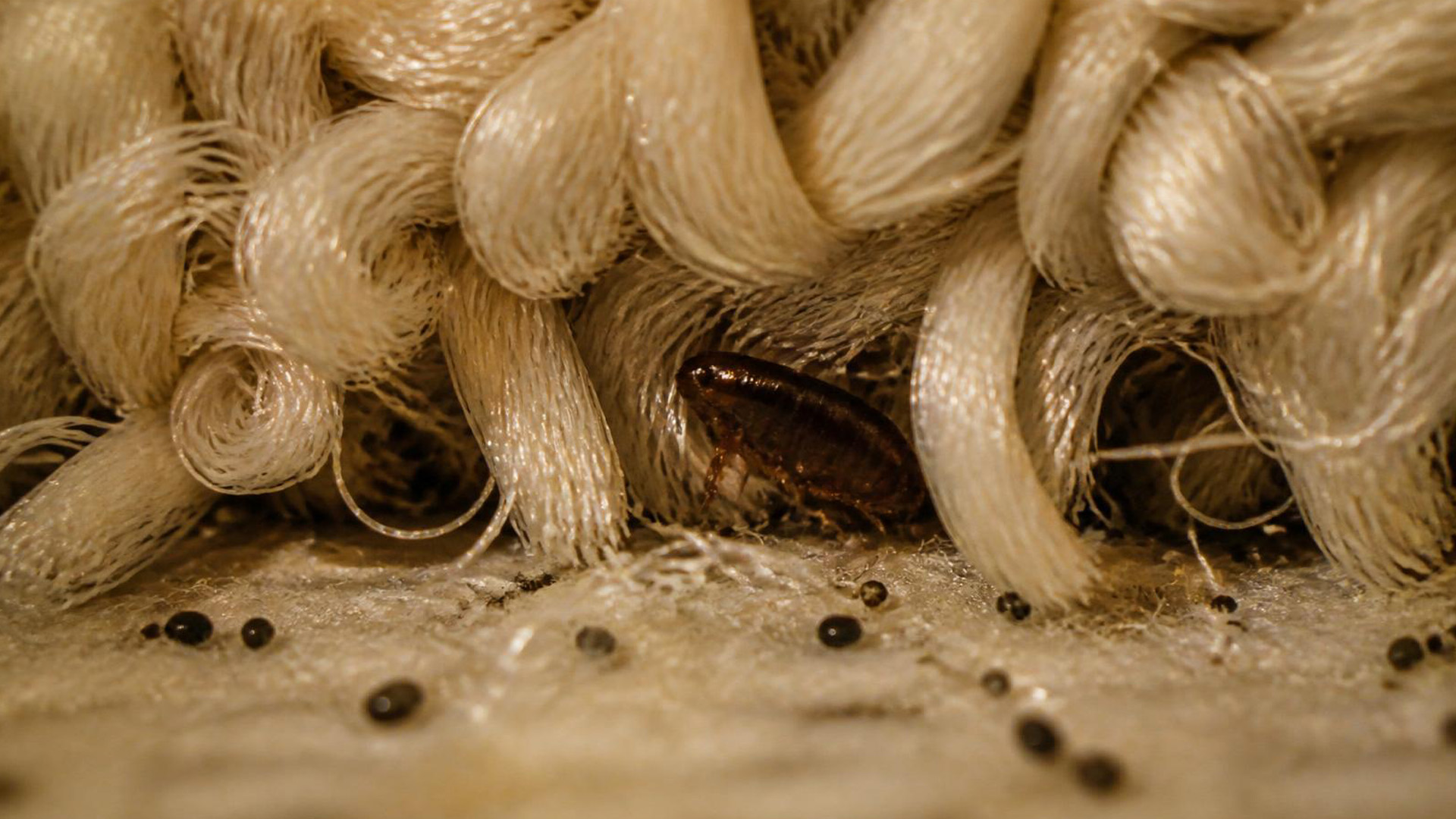
If you’ve suddenly noticed fleas inside your home toward the end of summer, you may assume they came from inside the house. In many cases, though, the problem actually started outdoors.
Late-summer fleas are especially common because warm temperatures, high humidity and increased wildlife activity create ideal conditions for flea populations to thrive. Pets can unknowingly carry fleas inside after spending time in the yard. Wildlife—such as squirrels, raccoons, opossums and stray cats—can leave fleas behind in shaded areas around your property. Once fleas make their way indoors, they can quickly become much more than a nuisance.
At Braman Termite & Pest Elimination, we know that successful flea control starts by looking beyond what’s happening inside your home. The most effective approach combines professional treatment with homeowner vigilance and veterinarian-recommended flea and tick preventatives for pets to help stop the flea life cycle before it flourishes.
At a Glance
- Late summer creates ideal conditions for flea populations to increase outdoors.
- Pets, wildlife and shaded areas of your yard can all contribute to indoor flea problems.
- Fleas reproduce quickly, making early intervention important.
- Reducing flea activity requires attention to your yard, pets and home.
- Professional flea treatments, combined with homeowner prevention and veterinarian-recommended flea and tick preventatives, provide the best long-term protection.
Why Late-Summer Fleas Become Such a Problem
Fleas are active throughout much of the year, but late summer often brings together the conditions they like best.
Warm temperatures help fleas develop more quickly through their life cycle, while humidity improves their chances of survival. As wildlife becomes more active and pets spend time outdoors, opportunities for fleas to hitch a ride into your yard, and then your home, increase.
Many homeowners are surprised to learn that fleas rarely live only on pets. Adult fleas feed on animals, but flea eggs often fall into the environment. That means your yard, landscaping, porch or even the shaded space beneath a deck can become a source of future infestations.
By the time you notice fleas hopping across the carpet or biting your ankles, they’ve often been developing outdoors for weeks.
How Fleas Get from Your Yard into Your Home
Your yard can act as a staging area for flea activity without showing any obvious signs.
Fleas prefer cool, shaded environments where they can avoid direct sunlight. Areas beneath shrubs, under decks, along fence lines, in leaf litter and around landscaping often provide the moisture and protection they need to survive. These are often cooler areas where pets may linger on hot summer days.
From there, fleas wait for a host to pass by. Your dog or cat may pick them up even during a quick trip outside. Even people can occasionally transport fleas into the home on shoes or clothing after walking through heavily infested areas.
Once inside, fleas don’t stay near the front door.
They spread into carpeting, upholstered furniture, pet bedding and cracks in flooring where eggs, larvae and pupae can continue developing. Because several stages of the flea life cycle occur away from the animal, eliminating only the adult fleas you can see rarely solves the problem.
Wildlife Can Be an Unexpected Source of Fleas
Even if your pets receive excellent preventative flea care, wildlife visiting your property can introduce fleas.
Common visitors include:
- Raccoons
- Opossums
- Squirrels
- Rabbits
- Stray cats
- Rodents
These animals often travel through the same shaded areas where fleas thrive. They may rest beneath decks, sheds, porches or dense shrubs, leaving flea eggs behind as they move through your property.
Because wildlife activity often increases during late summer, homeowners sometimes notice flea problems even when their own pets spend relatively little time outdoors.
If wildlife has established shelter around your home, addressing that issue can be an important part of preventing future flea infestations.
Protecting Your Yard from Late-Summer Fleas
While no yard can be made completely flea-proof, reducing favorable conditions can significantly lower flea pressure.
We recommend homeowners:
- Keep grass properly mowed.
- Trim overgrown shrubs and vegetation.
- Remove leaf litter where practical.
- Reduce excess moisture around the property.
- Limit areas where wildlife can hide beneath decks, sheds or porches.
- Discourage stray animals from visiting the yard.
- Keep outdoor pet bedding clean and dry.
These simple maintenance practices help make your property less attractive to both fleas and the animals that carry them.
Protecting Your Pets Is Just as Important
Your pets are often the bridge between outdoor flea populations and your home. Even indoor pets may be exposed if they spend time on patios, in backyards or around entryways.
That’s why we always recommend working closely with your veterinarian to determine the flea and tick preventative that’s right for your pet. Consistent use of veterinarian-recommended preventatives helps reduce the chance that fleas will establish themselves indoors after hitching a ride inside.
Regular grooming, routine flea checks and washing pet bedding can also help you identify problems before they become larger infestations.
Remember, treating your home without protecting your pets leaves an important gap in your flea prevention strategy.
Why Indoor Flea Problems Can Be Difficult to Eliminate
One reason fleas frustrate homeowners is that only a small percentage of the flea population exists as visible adult fleas.
Much of the population may still be developing as eggs, larvae or pupae hidden deep within carpets, rugs, furniture and flooring. This means you may continue seeing new adult fleas emerge even after initial treatment.
Vacuuming frequently helps remove eggs and stimulates developing fleas to emerge, making professional treatments more effective. Washing pet bedding, blankets and other washable fabrics in hot water can also help reduce flea populations inside the home.
Successful flea control requires patience because treatments are designed to interrupt the flea life cycle rather than simply eliminate the adults that are immediately visible.
Why Professional Flea Control Works Best
Over-the-counter flea products often kill the adult fleas you can see. Unfortunately, that addresses only part of the problem.
Professional flea control focuses on the entire infestation, targeting active fleas while helping interrupt future generations as eggs hatch and larvae develop.
Our technicians evaluate both the indoor and outdoor conditions contributing to flea activity. They identify likely sources, recommend practical prevention strategies and develop a customized treatment plan designed for your specific situation.
Because every property is different, the most successful results come from combining professional service with homeowner vigilance and ongoing veterinarian-recommended flea and tick preventatives for pets.
Together, these steps help reduce the chances of fleas returning after treatment.
Late-Summer Flea Prevention Checklist
Before flea populations grow larger, we recommend taking a few proactive steps:
- Mow your lawn regularly.
- Trim shrubs and remove excess leaf litter.
- Reduce wildlife harborage around your property.
- Use veterinarian-recommended flea and tick preventatives for pets year-round.
- Wash pet bedding frequently.
- Vacuum carpets and upholstered furniture regularly.
- Check pets after spending time outdoors.
- Contact a pest professional if flea activity continues despite prevention efforts.
A little prevention now can help keep a few outdoor fleas from becoming a much larger indoor problem.
Don’t Let Outdoor Fleas Take Over Your Home
Late summer is one of the most common times for flea problems to appear, but you don’t have to tackle them alone.
If you think you have a flea infestation, contact us as soon as possible. Our experienced team can identify the source of the problem, develop a customized treatment plan and help you protect your home, your family and your pets with the pride, honesty and quality we’ve delivered for generations.
Frequently Asked Questions About Late-Summer Fleas
Can fleas come into my house from the yard?
Yes. Pets are the most common way fleas enter the home, but people can occasionally carry them inside on shoes or clothing after walking through infested areas. Wildlife visiting your property can also introduce fleas into your yard.
Why are fleas worse in late summer?
Late summer often provides the warm temperatures and humidity fleas need to reproduce quickly. Wildlife activity also increases during this time of year, creating more opportunities for fleas to spread throughout neighborhoods.
Can indoor pets get fleas?
Yes. Even pets that spend most of their time indoors can be exposed if they occasionally go outside or if fleas are accidentally brought inside by people, other pets or wildlife.
Should I treat my yard for fleas?
If flea activity is coming from outdoors, treating only the inside of your home may not solve the problem. The most effective flea management often includes addressing both indoor and outdoor sources while keeping pets on veterinarian-recommended flea and tick preventatives.
Will fleas go away on their own?
Usually not. Because fleas reproduce rapidly and much of their life cycle occurs in carpets, furniture and outdoor environments, infestations often continue to grow without treatment.