
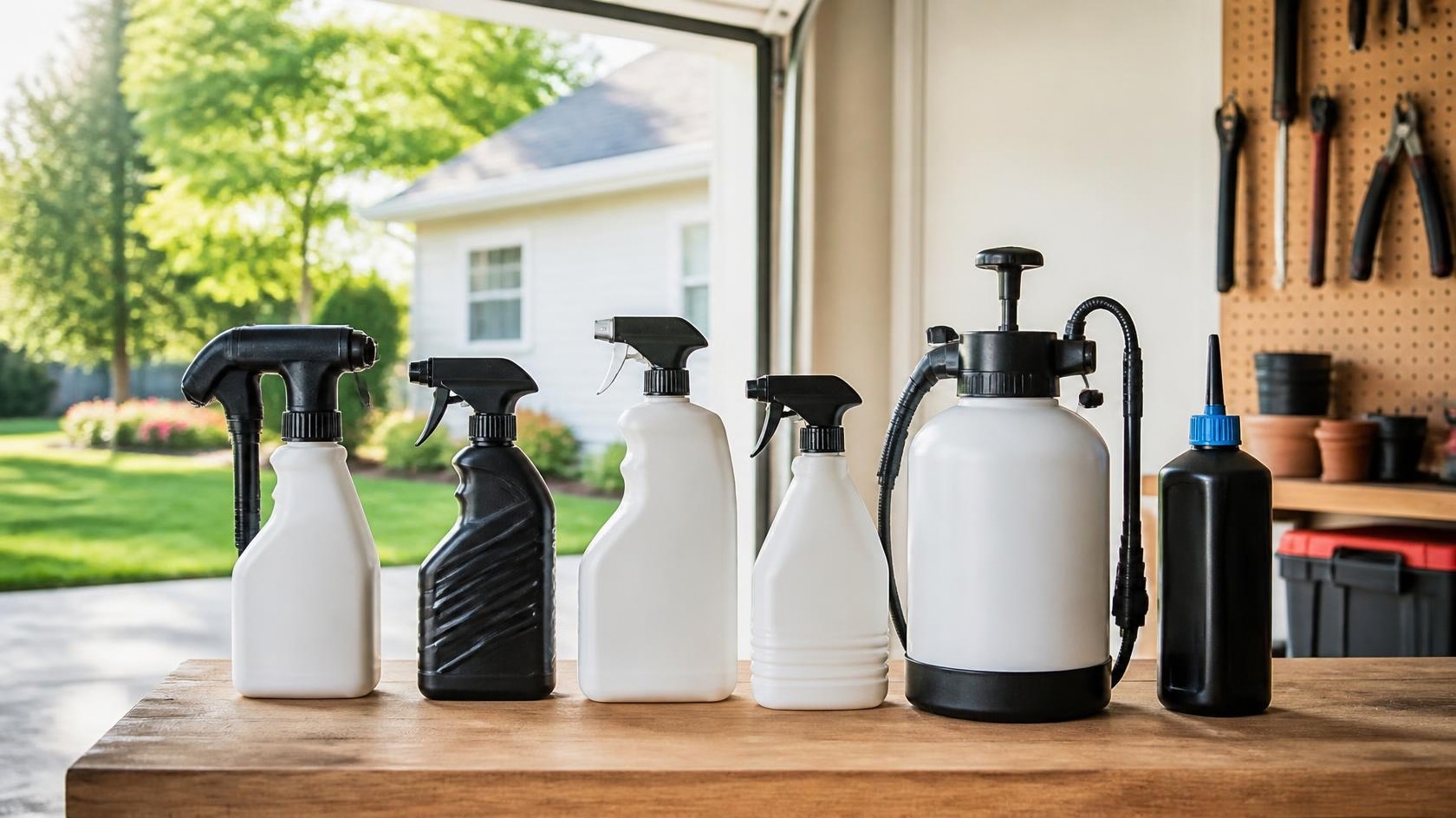
Choosing the wrong spray wastes money and leaves pest pressure unresolved. With dozens of products on store shelves, homeowners need clear guidance on what actually works. The top pest control sprays for homes that work share a few key traits worth understanding before you buy.
Introduction
Not every pest control spray delivers what its label promises. Some products kill on contact but leave no residual protection. Others are formulated for commercial facilities, not residential use. Knowing the difference matters.
Pest pressure varies by season, region, and pest type. A spray that handles ants along a foundation may do nothing for a tick problem in a backyard. Matching the right product to the right pest is the foundation of effective home pest management.
The stakes are real. Termites cause an estimated $6.8 billion in annual U.S. property damage, according to the National Pest Management Association. Getting pest control right the first time protects both your health and your property.
What Makes a Pest Control Spray Actually Work
The most effective home pest control sprays combine a proven active ingredient with a formulation that delivers residual protection. Contact kill alone is rarely enough.
Key factors that determine spray effectiveness include:
-
Active ingredient class: Pyrethroids cover over 3,500 registered products used in and around households, from flea treatments to general perimeter defense.
-
Residual duration: Bifenthrin controls over 75 pest species with residual effects lasting 4 to 12 weeks depending on surface and formulation.
-
Safety profile: The EPA’s 2019 review confirmed that pyrethrins and pyrethroids do not pose risk concerns for children or adults at currently registered uses.
-
Target specificity: Fipronil has approximately 800 times less affinity for mammalian receptors than for insect receptors, giving it a favorable residential safety profile.
-
Application method: Approximately 2 million pounds of permethrin are applied annually across U.S. residential and public health sites, with 41% applied directly by homeowners.
Types of Pest Control Sprays for Homes
Spray products fall into two primary categories. Understanding each helps homeowners choose the right format for their pest problem and comfort level.
“The sprays and aerosols segment led the pest control products market with 36.4% revenue share in 2025, reflecting their dominance as the go-to format for residential pest elimination.” – Grand View Research
Concentrates
Concentrates are liquid formulations that homeowners dilute with water before applying through a pump sprayer. They offer the best value per treatment and allow precise control over concentration levels. Products like Bifen IT fall into this category. Because concentrates are mixed fresh before each application, they tend to maintain potency longer than pre-mixed alternatives. They require careful measuring and appropriate personal protective equipment during mixing.
Ready-to-Use Sprays
Ready-to-use sprays come pre-diluted and require no mixing. They are convenient for spot treatments, crack-and-crevice applications, and quick perimeter touch-ups. Aerosol sprays are projected to account for 44.0% of the home insecticides market in 2025, confirming strong homeowner preference for this format. The trade-off is cost per square foot, which runs higher than concentrates for large-area treatments.
Why the Right Spray Outperforms Generic Bug Killers
Generic bug killers sold at discount retailers often lack the active ingredient concentration and residual formulation that professional-grade products provide. The gap in performance is measurable.
Residual Protection vs Contact Kill
A contact-kill-only product stops working the moment it dries. Residual sprays continue to eliminate pests that cross treated surfaces for weeks after application. A UC Riverside study found that a fipronil perimeter spot treatment reduced Argentine ant activity by 90% at 8 weeks, while a bifenthrin granule and perimeter spray combination achieved the same 90% reduction. Generic contact sprays cannot match that sustained performance.
Cost Savings Over Time
Repeated purchases of low-efficacy products add up quickly. Surface sprays on visible carpenter ants kill only 5 to 10% of the colony, leaving the queen and brood untouched inside the wall. Choosing a product with proven residual action reduces the number of applications needed and lowers total pest control spending over a season.
Best Pest Control Sprays for General Home Use
Across the United States, ants top the list of reported pests, affecting 56% of households. Mice and cockroaches follow, affecting 29% and 23% of homes respectively. The sprays below address the broadest range of common household pests.
Bifen IT (Best Overall Value)
Bifen IT is a bifenthrin-based concentrate that delivers broad-spectrum control across more than 75 pest species. It provides up to 12 months of indoor protection on non-porous surfaces and up to 3 months outdoors. Oklahoma State University Extension confirms that bifenthrin is effective as a perimeter application around buildings and as an ant mound drench. Its low cost per gallon of mixed solution makes it the top value choice for homeowners treating large areas.
Suspend SC (Best for Long-Lasting Killing Power)
Suspend SC uses deltamethrin as its active ingredient, a pyrethroid known for exceptional residual performance on porous and non-porous surfaces alike. It is particularly effective against cockroaches, spiders, and bed bugs. A National Library of Medicine study confirmed that bifenthrin-class pyrethroids remain effective for up to 35 days after application on treated surfaces. Suspend SC performs similarly, making it a strong choice when long-lasting killing power is the priority.
Natural and Pet-Safe Spray Options
Consumer preference is shifting toward botanical and natural formulations. About two out of three people surveyed preferred natural pest control products whenever possible, citing safety concerns for children and pets.
Effective natural options include:
-
Peppermint essential oil sprays: A 2025 study in Nature Scientific Reports found peppermint oil achieved mortality rates of up to 90% in pest adults at 1.0 ml concentration after 48 hours.
-
Diatomaceous earth (DE): A 2025 study in ACS Omega found DE achieved 98% mortality in insect larvae and 88% in adults. Pests cannot build resistance to DE because it kills mechanically.
-
Cedar, cinnamon, and clove oil formulas: An independent two-year study found a cedar/cinnamon/clove oil formula outperformed every product tested for mosquito control, including three top-selling synthetic pyrethroids.
-
Food-grade DE for flea control: The FDA recognizes food-grade DE as generally recognized as safe (GRAS) around animals, killing fleas by dehydration within 24 to 72 hours.
“The natural insect repellents market is projected to grow from $2.06 billion in 2025 to $2.23 billion in 2026 at an 8.6% CAGR, reflecting strong residential demand for chemical-free solutions.” – Research and Markets
How to Choose the Right Spray for Your Pest Problem
Selecting a spray without identifying the pest first is a common and costly mistake. Correct identification determines which active ingredient, formulation, and application method will actually work.
Matching the Label to Your Problem
Every pesticide label is a legal document. It lists the pests the product is registered to control and the surfaces and locations where it may be applied. In New England, tick-borne disease cases in Massachusetts rose 79% in three years, from 6,202 in 2022 to 11,115 in 2025. That makes tick spray selection a health-critical decision, not just a convenience. Read the label before purchasing, not after.
Protecting Pets and Sensitive Ecosystems
Outdoor label requirements for pyrethroids include keeping applications at least 10 feet from storm drains and 25 feet from aquatic habitats. This is especially important for Southern New England homeowners near coastal and wetland areas. The EPA recommends IPM approaches using traps, baits, and gels instead of sprays for households with older adults, young children, or sensitive pets.
How to Apply Pest Control Spray for Best Results
Proper application technique determines whether a spray performs as labeled. Even the best product underperforms when applied incorrectly.
Indoor Application: Start Where You See the Most Insects
Begin with a thorough inspection of the interior. Focus on cracks, crevices, baseboards, under appliances, and any area where sightings have occurred. A New York City Housing Authority study found that a single integrated pest management visit cut cockroach counts by 75% at 3 months and 88% at 6 months, far outperforming spray-only programs that skipped the inspection step. Treat entry points first: door frames, window frames, pipe penetrations, and utility entry points.
Outdoor Perimeter Treatment
The standard outdoor technique is the “3 feet up, 3 feet out” perimeter rule: spray 3 feet up the foundation wall and 3 feet out onto the ground in a continuous band, per DoMyOwn.com’s application guide. The University of Tennessee Extension recommends leaving a 12- to 18-inch bare zone around the base of the structure by removing mulch, vegetation, and moisture sources before spraying. Apply on calm days with no rain expected for 24 hours, and keep children and pets off treated areas until dry (approximately 1 hour for routine applications).
Conclusion
Selecting the right pest control spray requires more than grabbing the most recognizable product off a shelf. Active ingredient class, residual duration, and correct application technique all determine whether a treatment actually resolves pest pressure or simply delays it.
Homeowners who take the time to identify their pest problem, match the product label to that problem, and apply it correctly see significantly better results. For complex infestations or persistent sightings, a professional inspection from a trained exterminator remains the most reliable path to lasting protection.
Frequently Asked Questions
How much do pest control sprays cost for homeowners in the United States?
DIY pest control spray costs vary widely by product type and coverage area. Concentrates like Bifen IT typically cost $30 to $60 per bottle and treat thousands of square feet per diluted gallon, making them far more economical than ready-to-use alternatives for large areas. According to Forbes Home, 67% of U.S. homeowners spent money on pest control in a recent year, averaging $489 per household annually across DIY and professional services.
Which pests are most common for homeowners in the United States?
Pest pressure varies significantly by region across the United States. In the Northeast, mice affect 35% of residents, making rodent-targeted exclusion a priority, according to ConsumerAffairs. The NPMA’s 2026 Bug Barometer warns that the Mid-Atlantic and New England region should expect increased tick and stinging insect activity as temperatures rise, signaling when to shift spray priorities seasonally.
How long does pest control spray residual protection actually last?
Residual protection duration depends on the active ingredient, surface type, and weather exposure. Indoor applications on non-porous surfaces can provide up to 12 months of protection, while outdoor applications typically last up to 3 months, per PestDude.com. Natural botanical alternatives like essential oil formulas require more frequent reapplication. Fogging treatments may require homeowners to stay out of the treated area for 4 to 24 hours before re-entry.
How do natural sprays compare to synthetic pyrethroid sprays?
Natural formulations have improved significantly. Organic spinosad reduced pest infestations by 73.9% in a study of 153 field trials, while botanical pyrethrin reduced them by 48.6%, according to a 2023 NIH study. Synthetic pyrethroids generally outperform botanicals for residual duration and broad-spectrum coverage. Natural options are a practical choice for households with pets or children, particularly when combined with an integrated pest management approach.
How often should homeowners apply pest control spray?
Most households benefit from quarterly treatments, as common pests typically reappear within 3 to 4 months after a spray application. Active infestations may require monthly treatment for 3 to 6 months before stepping down to a quarterly schedule. Despite this, only 36% of homeowners take preventive measures against pests, according to the NPMA, leaving many homes at unnecessary risk between treatments.