
Pest problems rarely announce themselves clearly. A homeowner spots something crawling and reaches for the wrong product, wasting time and money while the infestation grows. Getting pest identification right before treatment is the step that changes everything.
Introduction
Pest pressure affects millions of homes and commercial facilities across the United States every year. Yet the most common mistake property owners make is treating before they know what they’re dealing with. Choosing the wrong method for the wrong pest doesn’t just fail. It can make conditions worse.
Braman Termite & Pest Elimination has served Southern New England since 1890, and the questions we hear most often come down to the same themes: What is this pest? What method works? When should I call a professional?
Understanding pest identification and control methods helps property owners make smarter decisions, protect public health, and avoid costly missteps before pest pressure becomes a serious problem.
What Is Pest Identification (And Why It Comes First)
Pest identification is the process of determining exactly which species you’re dealing with before selecting any control method. It sounds straightforward, but it’s where most DIY efforts break down.
According to the U.S. EPA, the first step of pest control is to identify your pest. Learning about the pest helps pinpoint the most vulnerable stage in its life cycle. Penn State Extension reinforces this directly: incorrect pest identification leads to unsuitable solutions.
The numbers back this up:
- Bed bug misidentification: Only 29% of Americans correctly identify bed bugs, and 90% of pest control professionals report customers regularly call about suspected bed bugs that turn out to be a different pest entirely, according to an NPMA/Harris Poll survey.
- False alarm culprits: Carpet beetles account for 60% of bed bug false alarms; flies appear in 48% of misidentification cases; cockroaches account for 32%, per NPMA’s Bugs Without Borders data.
- Most reported pests: Ants top reported pests at 56% of U.S. households, followed by mice at 29% and cockroaches at 23%, yet many homeowners confuse species and choose wrong treatments, according to ConsumerAffairs.
- Ecological context: Fewer than 3% of known insect species are considered pests, per West Virginia University Extension. The rest play vital roles as pollinators and decomposers.
The Five Main Pest Control Methods Explained
Pest control draws on five distinct method categories. Professionals select among them based on pest species, infestation severity, and environmental considerations. No single method works for every situation.
Chemical and Biological Methods
Chemical control remains the most widely used approach, holding approximately 56.3% of global pest control market revenue in 2025, according to GM Insights. It delivers fast results for active infestations but carries risks: excessive use can cause resistance and contributes to water contamination.
Biological control uses natural enemies, including predatory insects and parasitoids, to suppress pest populations. A meta-analysis of 99 studies on 31 crops found that biocontrol interventions reduced pest abundance by 63% and crop damage by over 50%, according to Frontiers in Insect Science (2025). Natural enemy abundance was 43% greater than in chemical-only programs.
Mechanical, Physical, and Cultural Methods
Mechanical and physical control includes traps, barriers, and structural exclusion. Full structural rodent exclusion delivers a 90%+ success rate and is the fastest-growing segment in the U.S. pest control market, driven by demand for non-toxic, LEED-compliant solutions, according to Briostack. For commercial facilities, this includes sealing loading docks, dumpsters, and delivery areas.
Cultural control addresses the conditions that invite pests in the first place. Natural pest control techniques can reduce chemical pesticide use by up to 80% on sustainable farms, per Farmonaut (2025). Consumer preference for eco-friendly methods has grown from 21% in 2020 to 29% in recent years.
The Three Rules of Pest Control (And Why They Work)
Effective pest management follows three rules in sequence: identify correctly, remove conditions that attract pests, then treat using the least-risk method available. Skipping any step reduces results.
Rule 1: Correct Identification Before Treatment
The University of Hawaii’s Cooperative Extension states it plainly: never attempt a pest control program until you are sure what the pest is. Correct identification lets you target the life stage most vulnerable to control, per the University of Hawaii APC Core Study Guide.
Rutgers University Extension adds that appropriate pest control actions depend entirely on correct identification. They recommend scouting at least twice per week under sound IPM protocols to catch new sightings early.
Rules 2 and 3: Remove Conditions, Then Treat
The EPA defines prevention as removing conditions that attract pests, including food, water, and shelter, and describes it as the first line of defense in any IPM program, per the EPA’s Introduction to Integrated Pest Management.
Treatment comes last, and only when necessary. Virginia Tech’s Pest Management Guide states that you should control a pest only when it is causing, or is expected to cause, more damage than is reasonable to accept, per Virginia Tech Extension. This threshold-based approach prevents unnecessary pesticide use and protects the environment.
Do-It-Yourself Pest Control: What Works and What Doesn’t
DIY pest control works for minor, clearly identified pest issues. For established infestations, the results tell a different story. About 74% of homeowners perform some type of DIY pest control, but for established infestations, DIY success rates drop to just 10-30%, while professional services achieve 85-99% resolution, according to ConsumerAffairs.
DIY options that perform reasonably well for minor pest pressure include:
- Snap traps and glue boards: Effective for early-stage rodent sightings when placed correctly along walls and near entry points.
- Bait stations: Work for ants and cockroaches when the correct bait is matched to the species after proper identification.
- Exclusion caulking: Sealing gaps around pipes and windows reduces pest entry without any chemical use.
- Store-bought sprays: Limited effectiveness for bed bugs, with OTC sprays achieving only a 10-25% eradication rate, per GreenHow’s 2026 report. DIY foggers can scatter cockroaches into new rooms, worsening infestations.
A PLOS study found that only 11.8% of pesticide retailers’ recommendations were correct throughout the entire recommendation process, with 49% proposing the wrong pesticide for the pest, per PLOS Sustainability & Transformation.
Non-Chemical Pest Control: Exclusion, Sanitation, and Moisture
Non-chemical methods form the foundation of any sound pest management program. They reduce pest pressure without introducing chemical risk to occupants or the environment, and they address the root causes of infestation rather than the symptoms.
Barriers, Exclusion, and Moisture Control
Exclusion means physically blocking pest entry points. The EPA identifies weatherization and physical exclusion as non-chemical controls that simultaneously exclude pests and save energy, per the EPA’s Introduction to IPM. For commercial facilities, this means inspecting the exterior, sealing gaps at loading docks, and securing dumpster areas regularly.
Sanitation removes the food and harborage that sustain infestations. USDA ARS research published via NCBI found that poor sanitation caused a 1.3x to 17x decrease in pest control efficacy across most management tactics.
“Controlling excessive moisture is the most effective way to address indoor air quality problems tied to pests and biological contaminants.” – U.S. EPA
Moisture control is equally critical. The Department of Energy confirms that damp wood is especially appealing to termites and carpenter ants, per the DOE Building America Solution Center. Maintaining indoor humidity below 50% deters cockroaches, termites, spiders, and silverfish.
When to Hire a Professional Pest Control Service
Some pest situations require professional intervention. Knowing when to make that call protects both property and public health.
Signs that warrant a professional inspection include:
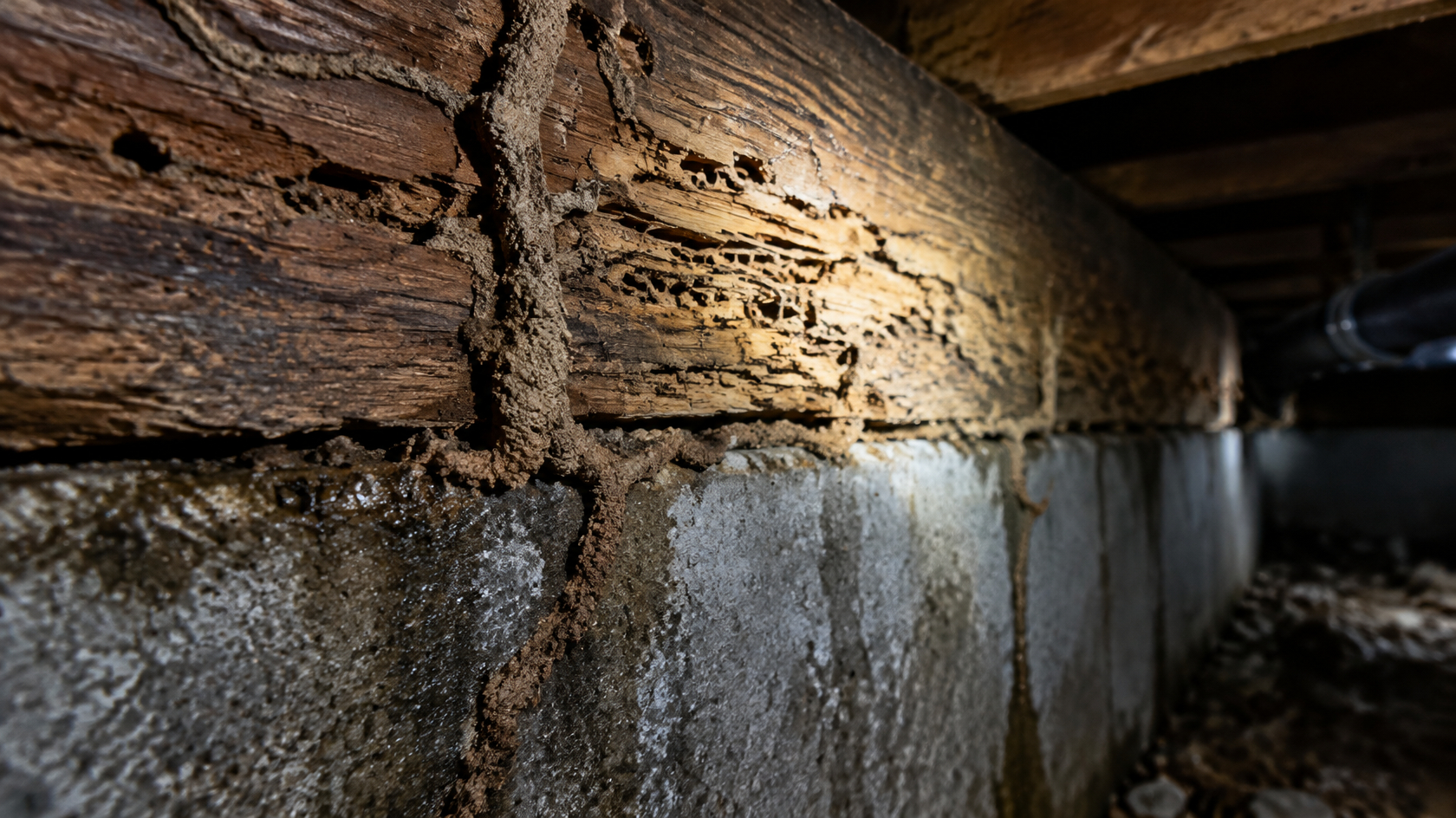
- Termite sightings or damage: It can take three years or longer to detect a termite infestation, during which a colony can consume up to a pound of wood per day. Average repair costs run $3,000 to $5,000 and are not covered by standard homeowner’s insurance, per NPMA.
- Recurring infestations: When the same pest returns after repeated DIY treatment, the source condition has not been addressed.
- Bed bugs: Professional IPM reaches 90-95% eradication; professional heat treatment achieves 98-100%, far above any OTC option.
- Wildlife intrusion: Birds, bats, and nuisance wildlife require humane removal and exclusion handled by trained professionals.
- Commercial facilities: Food service operations, health care facilities, and other regulated environments face compliance requirements that demand professional-grade programs.
“52% of U.S. homeowners used a licensed pest control professional in the past year, and 84% of consumers agree that pest control professionals play an important role in protecting public health.” – NPMA
Integrated Pest Management: The Framework Behind Effective Control
Integrated Pest Management (IPM) is the structured framework that ties identification, prevention, and treatment together. The EPA defines IPM as an effective and environmentally sensitive approach that relies on a combination of common-sense practices, using a four-tiered implementation approach: set action thresholds, monitor and identify pests, prevent, then control using least-risky methods first, per EPA’s IPM Principles page (last updated July 22, 2026).
The results are measurable. In U.S. schools with IPM programs, only 14% of dust samples had detectable pest allergens, compared to 44% from schools using conventional pest management, according to the EPA’s Introduction to IPM in Schools.
“A systematic review of over 200 studies demonstrated that IPM can reduce pesticide use by 40-70% and increase crop yields by 10-35%.” – Springer
The global IPM market reached $26.80 billion in 2025 and is forecast to grow to $37.30 billion by 2030, per Mordor Intelligence.
Conclusion
Pest identification is not a preliminary step. It is the step that determines whether every other action succeeds or fails. Choosing a control method without knowing the species, life stage, and behavior of the pest wastes resources and can worsen pest pressure.
Non-chemical methods, exclusion, sanitation, and moisture control form the foundation of any effective program. Professional treatment, applied through an IPM framework, addresses what DIY approaches cannot. For homeowners and facility managers across Southern New England, Braman Termite & Pest Elimination brings the training, experience, and honest service that pest problems demand. Contact us at 800-338-6757 or visit bramanpest.com.
Frequently Asked Questions
How much does professional pest control cost in the United States?
Professional pest control costs vary widely by pest type, infestation severity, and service frequency. The U.S. pest control industry generated $13.416 billion in service revenue in 2025, with 85.4% of residential revenue coming from recurring service contracts, according to the NPMA. Recurring contracts typically cost less per visit than one-time treatments and provide ongoing monitoring that catches new sightings before they escalate.
How widespread is pest pressure in the United States?
Pest pressure affects a significant share of U.S. households every year. Employment of pest control workers is projected to grow 6% from 2025 to 2035, faster than the national average, with about 13,700 job openings per year, according to the U.S. Bureau of Labor Statistics. That sustained demand reflects how consistently pests affect homes and commercial facilities across the country, including emerging threats like the spotted lanternfly expanding into new regions.
How fast can a pest infestation grow if left untreated?
Infestations can expand faster than most property owners expect. A female German cockroach can reach reproductive adulthood in as little as 36 days and produce up to 300 offspring in her lifetime. Bed bugs lay 1 to 5 eggs per day and up to 500 in a lifetime, and can travel 100 feet per night seeking a host, per Penn State Extension. Early inspection and treatment are essential.
How does professional pest identification differ from DIY assessment?
Professional identification draws on laboratory-level expertise that most homeowners cannot replicate. Virginia Tech’s Insect Identification Laboratory alone received 905 requests in 2024, producing 1,017 determinations, with 49% of all samples submitted electronically, per the Virginia Tech Insect ID Laboratory Annual Report 2024. Professionals can distinguish pest termite species from the 14 non-pest termite species, helping property owners avoid costly, unnecessary treatments.
What should a homeowner do first when starting a pest control program?
Start with a thorough inspection before purchasing any product. Only 36% of homeowners are familiar with common signs of termite infestation, and only 58% are even aware of the structural damage termites cause, according to NPMA. A professional inspection of the exterior and interior, including crawl spaces, loading docks for commercial properties, and moisture-prone areas, establishes a baseline before any treatment decision is made.