
Pest problems rarely announce themselves clearly. You spot something, reach for a spray can, and hope for the best. But for millions of homeowners, that approach quietly allows infestations to grow into costly structural damage and serious health risks.
Introduction
Knowing when a homeowner should hire a pest identification expert instead of attempting DIY is one of the most practical decisions a property owner can make. Store-bought sprays and traps handle minor, isolated pest pressure well enough. Established infestations are a different matter entirely.
Pest misidentification is more common than most people expect. Carpenter ant damage looks nearly identical to termite damage to an untrained eye. Bat bugs are routinely confused with bed bugs. Getting the species wrong means treating the wrong problem, spending money on ineffective products, and giving the real infestation more time to spread.
The financial stakes are significant. Termite damage alone costs U.S. residents an estimated $5 billion annually, and that damage is typically not covered by homeowners’ insurance. Understanding the clear signs that call for professional expertise protects both your property and your household’s health.
What a Pest Identification Expert Actually Does
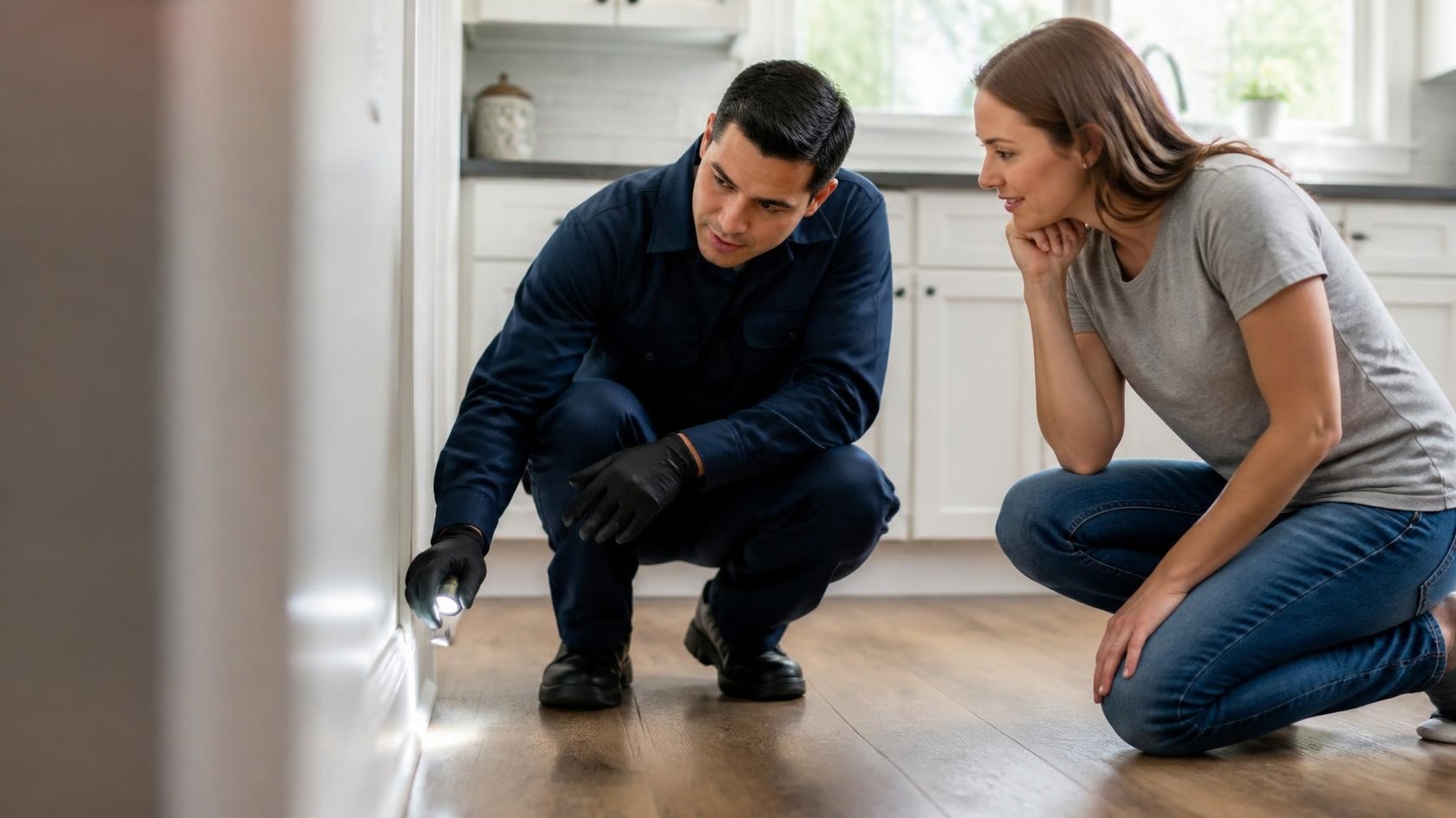
A pest identification expert does far more than spray a perimeter. Professionals conduct thorough inspections of attics, crawl spaces, wall cavities, and basements using tools like thermal imaging cameras and moisture meters to locate hidden infestations that a homeowner would never find.
Key services a pest identification expert provides include:
- Species-level identification: Determining the exact pest and understanding its behavior, life cycle, and harborage preferences
- Detailed inspection report: A written record of findings, entry points, and conditions driving pest pressure
- Tailored treatment plan: Selecting from baiting systems, targeted applications, traps, or exclusion techniques based on the specific pest
- Restricted-use products: Access to professional-grade pesticides and exclusion materials unavailable to consumers
- Long-term prevention: Sealing entry points and establishing ongoing monitoring to prevent recurrence
When DIY Pest Control Falls Short
DIY pest control consistently falls short against established infestations, even though ConsumerAffairs reports that 74% of homeowners attempt it. Store-bought products and home remedies rarely eliminate a mature colony or hidden population. When an infestation is already entrenched, the results of going it alone are reliably disappointing.
Common failure points of DIY pest control include:
- Low success rate: Only 28% of DIY treatments break pest breeding cycles, compared to 91% of professional applications, per University of Melbourne research cited by PestControlSydney
- Short protection window: DIY products protect for roughly 3 to 4 weeks; professional barriers last 8 to 12 weeks
- Misapplication: The Australian Pesticides and Veterinary Medicines Authority reports 80% of over-the-counter products are applied incorrectly, cutting effectiveness by more than half
- Recurring infestations: Homes relying only on DIY are three times more likely to face recurring infestations than those using professional services
How Do I Know My DIY Method Is Not Working?
The clearest signal is persistence. If pest sightings continue or increase after two full rounds of DIY treatment, the underlying colony or harborage area has not been reached. According to Daps Pest, non-professionals misapply pest products more than twice as often as licensed technicians, and those mistakes allow infestations to rebound quickly.
Other warning signs include pests spreading to new rooms, finding evidence in areas you haven’t treated, and noticing the same pest returning within weeks of treatment. A 2025 Scorpion survey found 54% of homeowners still rely on sprays and traps despite repeat infestations, which signals the product isn’t solving the root cause.
Pest Types That Demand Expert Eyes
Certain pest types demand expert eyes because they are too dangerous, too hidden, or too easily misidentified for homeowners to handle safely on their own. Three categories consistently require professional inspection to achieve accurate identification and effective treatment, making DIY attempts not just ineffective but potentially risky.
Termites and Wood-Boring Insects
Termites damage approximately 600,000 U.S. homes each year, according to industry data. The average homeowner who confirms an infestation spends $3,000 on repairs, with severe cases reaching $37,500. Termite damage is typically not covered by homeowners’ insurance, making early professional detection critical.
Pest management professional Ricardo Duran Jr. warns that ants are repeatedly mistaken for termites, leading homeowners to spend thousands on unnecessary treatments that target the wrong pest entirely, per reporting from EIN Presswire.
Bed Bugs
Bed bugs are among the most difficult pests to eliminate without professional help. Consumer-grade sprays succeed less than 20% of the time for full elimination. A Harris Poll/NPMA survey conducted in April 2025 found only 29% of Americans can correctly identify bed bugs, the most common household pest.
Professional bed bug treatments reach 95% or higher success rates. Delays caused by failed DIY attempts push treatment costs higher and allow the infestation to spread deeper into wall voids and furniture.
Stinging Insects
Wasps, hornets, and certain bee species present genuine safety risks during removal. Nest location matters enormously: a colony inside a wall void requires a completely different approach than one hanging from a porch eave. Mishandling a stinging insect nest can provoke a defensive swarm, creating a medical emergency. A professional inspection identifies the species, locates the nest precisely, and selects a removal method appropriate to the situation.
The Risk of Recurring Infestations
Recurring infestations are the most expensive outcome of delayed professional intervention, and they are far more common than most homeowners expect. According to a Forbes Home survey, roughly 40% of American homeowners deal with a pest infestation every year, and in nearly every case an earlier warning signal was dismissed.
The financial consequences of the DIY cycle are well documented:
- Average DIY journey cost: $380, taking approximately 9 months before calling a professional
- Termite damage during that window: Roughly 40 feet of damage accumulates before professional treatment begins
- Pesticide resistance: Pests surviving low-strength applications pass on resistance traits, making future control progressively harder
- Structural damage: 50% of surveyed homeowners report some form of structural damage caused by pests, per Dodson Pest Control data cited by Forbes
Why Professional Pest Control Outperforms DIY for Complex Cases
Professional pest control outperforms DIY for complex cases because it achieves documented success rates of 83% to 100% depending on pest type, compared to just 10% to 30% for DIY methods against established infestations, according to the GreenHow Pest Control 2026 Report. That gap makes professional service the clear choice when an infestation is entrenched.
The performance gap comes from methodology, not just products:
- Integrated Pest Management (IPM): An NRDC study found IPM practices reduced pest-removal costs by roughly one-third and cut pest complaints by up to 90% in studied properties, per Insect.com
- Inspection-first approach: A New York City study found a single professional visit combining inspection, monitoring, and targeted treatment cut cockroach counts by 75% at three months
- Cost-effective prevention: A professional quarterly service can prevent thousands of dollars in termite damage for a fraction of the repair cost
- Reduced chemical exposure: The EPA estimates 80% of most people’s pesticide exposure occurs indoors, per GreenHive, making correct professional application safer than repeated DIY chemical use
How to Choose the Right Pest Control Professional
Choosing the right pest control professional starts with verifying that the company offers the specific expertise your infestation requires, because not all providers deliver the same level of knowledge or results. Selecting correctly protects both your property and your investment in professional service, making due diligence before hiring essential.
Key criteria for selecting a qualified pest control professional:
- Credentials: Look for the NPMA PRO Certified credential, launched in January 2025, which requires passing a 150-question exam and completing 30 hours of continuing education every three years, per PCT Online
- State licensing: Verify the company holds a current state pesticide license and has no complaints on file with your state pesticide regulatory agency
- IPM practices: Companies using Integrated Pest Management demonstrate a commitment to long-term results over repeated chemical applications
- Written documentation: Demand a written inspection report, transparent pricing, and a clear warranty before signing any contract
- Inspection cost: A professional pest inspection typically costs $125 to $450, with many companies offering free general inspections, per Angi
Key Signs You Should Call an Expert Today
You should call an expert today if you are seeing certain sightings or conditions that store-bought treatments cannot reliably address, because waiting only allows pest pressure to increase. Immediate professional inspection is the appropriate response rather than another round of retail products, which rarely resolve an established or hidden infestation.
Call a pest identification expert immediately if you observe any of the following:
- Mud tubes or hollow-sounding wood: Classic termite indicators requiring professional confirmation before any treatment begins
- Daytime cockroach sightings: Cockroaches appearing during daylight hours signal a colony so large it’s being pushed into the open
- Rodent droppings, gnaw marks, or scratching in walls: Rodents chewing on electrical wiring and gas lines contribute to serious fire and safety risks
- Visible bed bug evidence: Shells, staining, or live insects on mattress seams demand professional response, not OTC sprays
- Unidentified pest evidence: A 2026 survey found 76% of homeowners have encountered signs of a pest they couldn’t immediately identify, per Modern Pest Services
- Two failed DIY attempts: If treatment has not resolved the problem after two rounds, the infestation requires professional-level inspection and treatment
Conclusion
Pest identification is more complex than it appears. The difference between carpenter ant damage and termite damage, or between a bat bug and a bed bug, is not visible to the untrained eye. Getting the identification wrong means treating the wrong pest, wasting money, and allowing the real problem to worsen.
Professional pest control consistently outperforms DIY for established infestations, particularly for wood-destroying insects, bed bugs, and stinging insects. The cost of a professional inspection is modest compared to the structural and financial damage that accumulates during a prolonged DIY cycle. Knowing when to call an expert is one of the most protective decisions a homeowner can make.
Frequently Asked Questions
How do I choose between DIY and hiring a pest identification expert?
DIY pest control works for minor, isolated pest pressure where the species is clearly identifiable. Hire a professional when sightings persist after two treatment attempts, when pests have spread to multiple rooms, or when you cannot identify the species. According to a 2024 Forbes Home survey, 54% of homeowners believe professional pest control works best, citing expert identification and long-term effectiveness as the primary reasons.
What if I can’t afford professional pest control right now?
Many pest control companies offer free general inspections, which costs nothing and gives you a professional assessment of the infestation’s scope. Some companies also offer payment plans for treatment. Delaying professional intervention typically increases total costs significantly. A written inspection report from a free visit still gives you accurate species identification, which is the most critical step before choosing any treatment path.
How accurate is professional pest identification compared to homeowner identification?
Professional accuracy is substantially higher. A 2026 homeowner survey found 87% of respondents failed to identify carpenter ant damage, 91% failed to identify bat guano, and 65% failed to identify rat droppings. Professionals use thermal imaging, moisture meters, and species-level knowledge of behavior and life cycles. Differentiating bat bugs from bed bugs, for example, requires microscopic examination that no consumer tool can replicate.
Is professional pest control safer than repeated DIY chemical use?
Yes, for established infestations. Licensed technicians apply products correctly at appropriate concentrations and locations. The EPA estimates that about 80% of most people’s pesticide exposure occurs indoors, largely from misapplied consumer products. Professional pest control companies practicing Integrated Pest Management reduce chemical reliance by combining physical barriers, biological controls, and targeted applications, which protects both household health and the surrounding environment.
How much does professional pest control cost in the United States?
A professional pest inspection in the United States typically costs between $125 and $450, with many companies offering free general inspections. Annual prevention plans run approximately $300 to $800. Specialty treatments such as bed bug remediation range from $1,000 to $5,000 depending on infestation severity. These figures are modest compared to average termite repair costs, which can reach several thousand dollars when an infestation goes undetected for an extended period.