
March is a good time to start taking a quick “spring lap” around the house, because termite swarm season can kick off on the first warm, humid stretch of spring weather. In New England, this can happen as early as March, depending on conditions.
At a Glance
- To help deter termites, focus on moisture control, wood-to-soil separation and sealing entry points.
- If you see a swarm, act quickly and document it because swarms are a big clue that termites are nearby, and may be already chomping on your home.
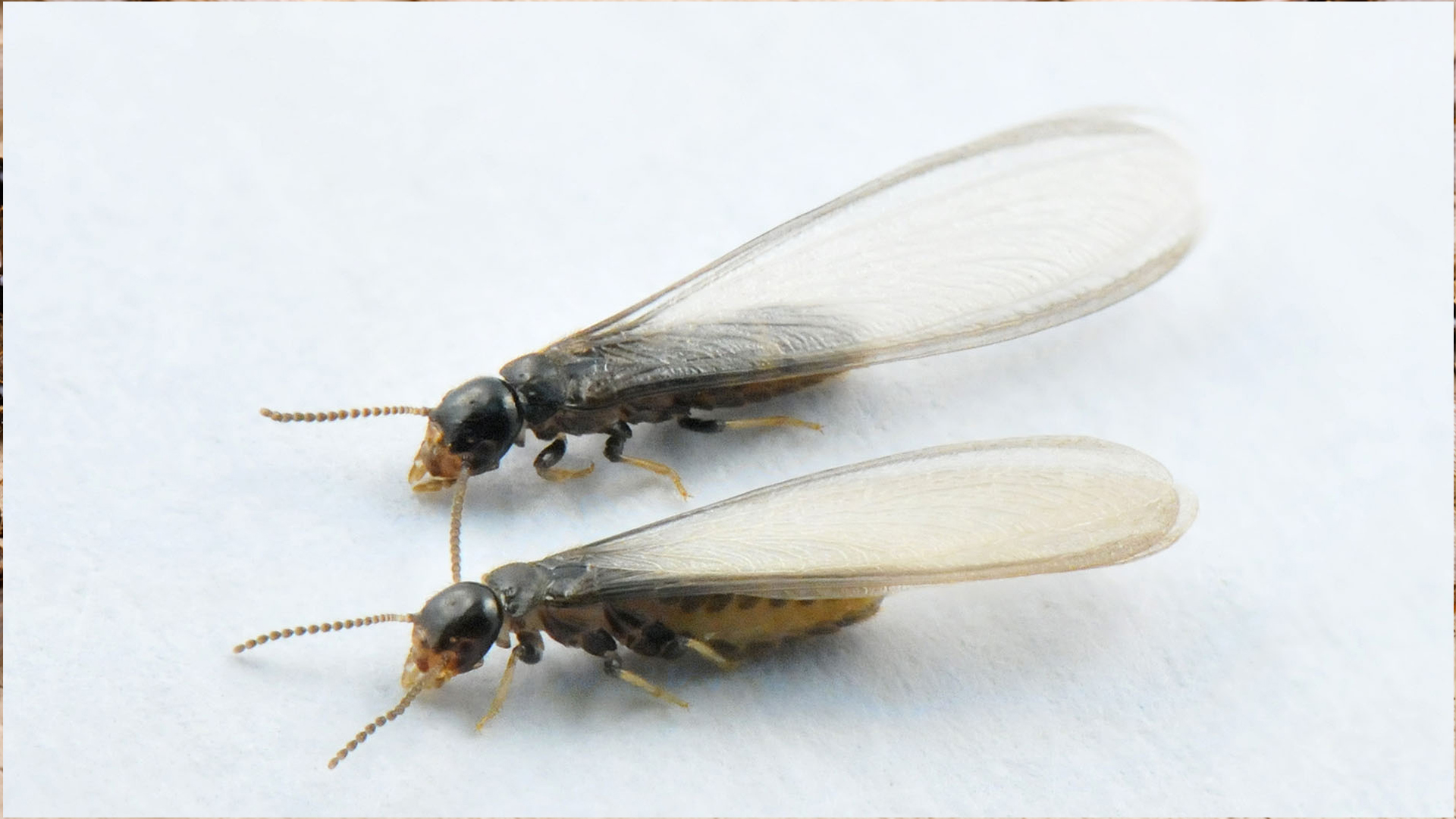
- Swarmers are small, darker-bodied termites with translucent wings that they shed.
Why Termites Swarm in Spring
A swarm happens when winged reproductive termites leave an established colony to find a mate and start a new colony. After they pair up, they shed their wings and look for a protected spot with wood and moisture.
Termites don’t all look the same because a colony has three types: swarmers, workers and soldiers. The ones homeowners notice most are the swarmers, which are small, darker-bodied termites with translucent wings that break easily.
The workers and soldiers are harder to spot because they’re usually tucked into damp, protected areas. They tend to be cream colored with six legs, a narrow oval body and straight antennae.
Termites are often mistaken for ants, but termites typically have a broader waist, and swarmers have four wings that are similar in size. If you see what looks like flying ants near windows or light sources, try to take a photo or save a few in a sealed bag so our professionals can confirm what you’re dealing with and recommend the best course of action.
March Prep Checklist to Deter Termites
Here’s what we recommend doing now, before swarmers start shopping for real estate:
- Fix moisture issues. Repair leaky spigots, pipes and gutters. Make sure downspouts push water away from your home’s foundation.
- Avoid wood-to-soil contact. Keep siding, trim and deck posts from touching soil. Store firewood up off the ground and away from the house.
- Watch your mulch. Keep mulch from piling against the foundation and don’t bury siding.
- Seal easy entry points. Caulk small gaps, repair torn screens and seal cracks around utility penetrations.
- Trim back and tidy up. Pull shrubs back from the exterior and clear old stumps, scrap lumber and cardboard near the home, all of which beckon termites.
- Schedule a professional inspection. If you want extra peace of mind, preventive options like the Sentricon® Colony Elimination System can be used as a low-toxicity layer of protection.
What to Do If You See a Termite Swarm
- Don’t ignore it. An indoor swarm is usually a sign a colony is already present and may have been there for at least three years.
- Grab evidence. Take a photo or collect a few insects in a sealed bag.
- Act fast. Swarms are short-lived, often 30–40 minutes, but they’re a big red flag of a problem. Even if you don’t see a swarm, there are other signs you may have a termite infestation.
- Call for an inspection. The sooner we confirm what you’re seeing, the sooner we can initiate a plan to protect your home from extensive (and expensive) damage.
Termites Require Prompt Treatment
Don’t let termite swarm season lead to costly damage to your property. If you see a swarm or any other signs of an invasion, reach out to us or request a quote online quickly.
Our pros will do a thorough inspection to assess termite activity, show you any areas of vulnerability and recommend treatment or preventive measures. Annual termite protection is also available as one of our MultiPest+ plans, if you want to bundle and save.